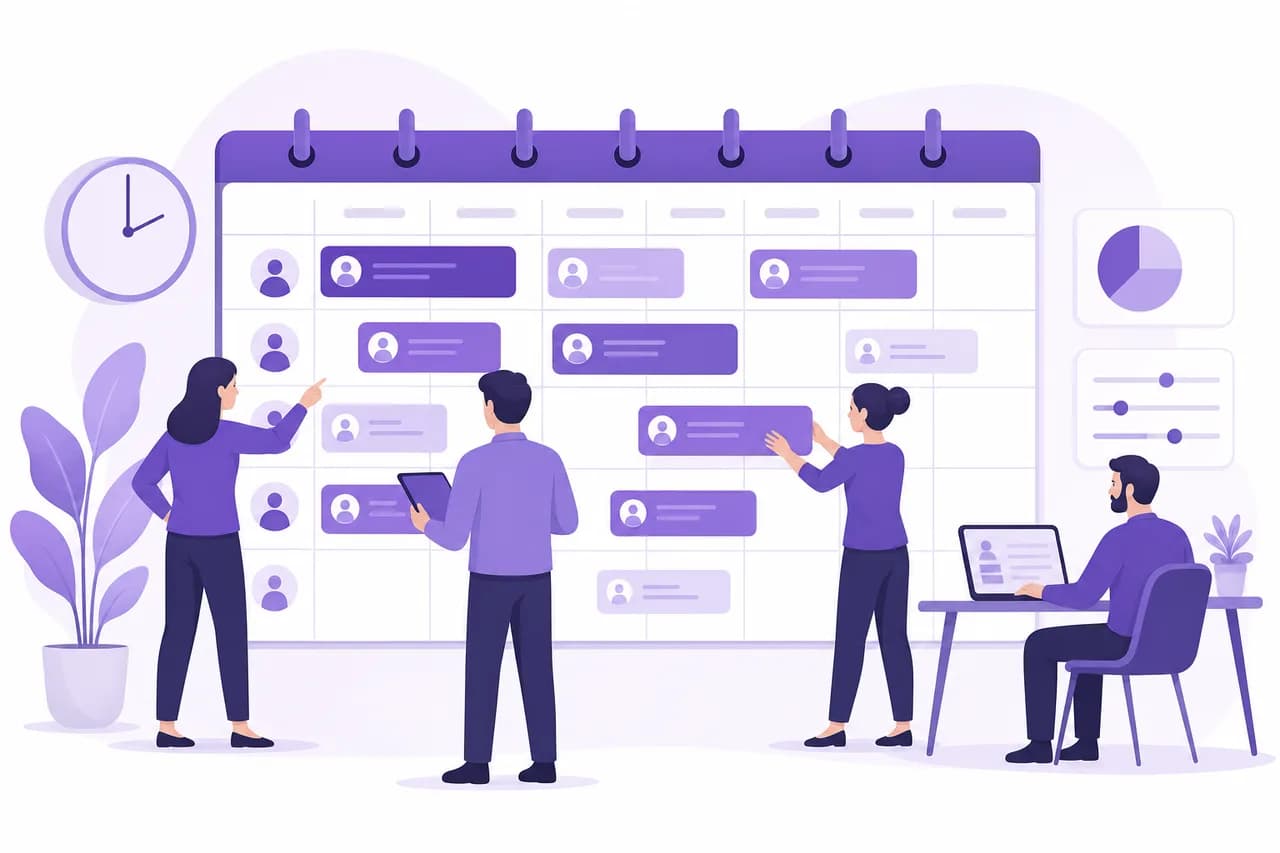
Fair schedules balance coverage, time off, and predictable hours. Use workforce tools to plan shifts without last-minute chaos.
Publish schedules early
Teams perform better when they know their hours at least two weeks ahead. Late changes increase no-shows and duplicate time entries.
Treat the schedule as a commitment, not a draft that changes daily.
Track time off in the same system
When PTO and shift planning live together, you avoid assigning shifts to people who are out.
Hubnity workforce features help managers see availability before they publish a week.
Rotate undesirable shifts
Fairness is procedural. Rotate weekends, late shifts, or on-call blocks so the burden does not fall on the same people.
Document the rotation pattern so the team trusts the process.
Leave buffer for handoffs
Schedule overlap between shifts when knowledge transfer matters. Fifteen minutes of overlap prevents duplicate work and missed tickets.
Review actual hours versus plan
Compare scheduled hours to tracked time monthly. Persistent gaps signal unrealistic planning or training needs—not necessarily laziness.